The brief
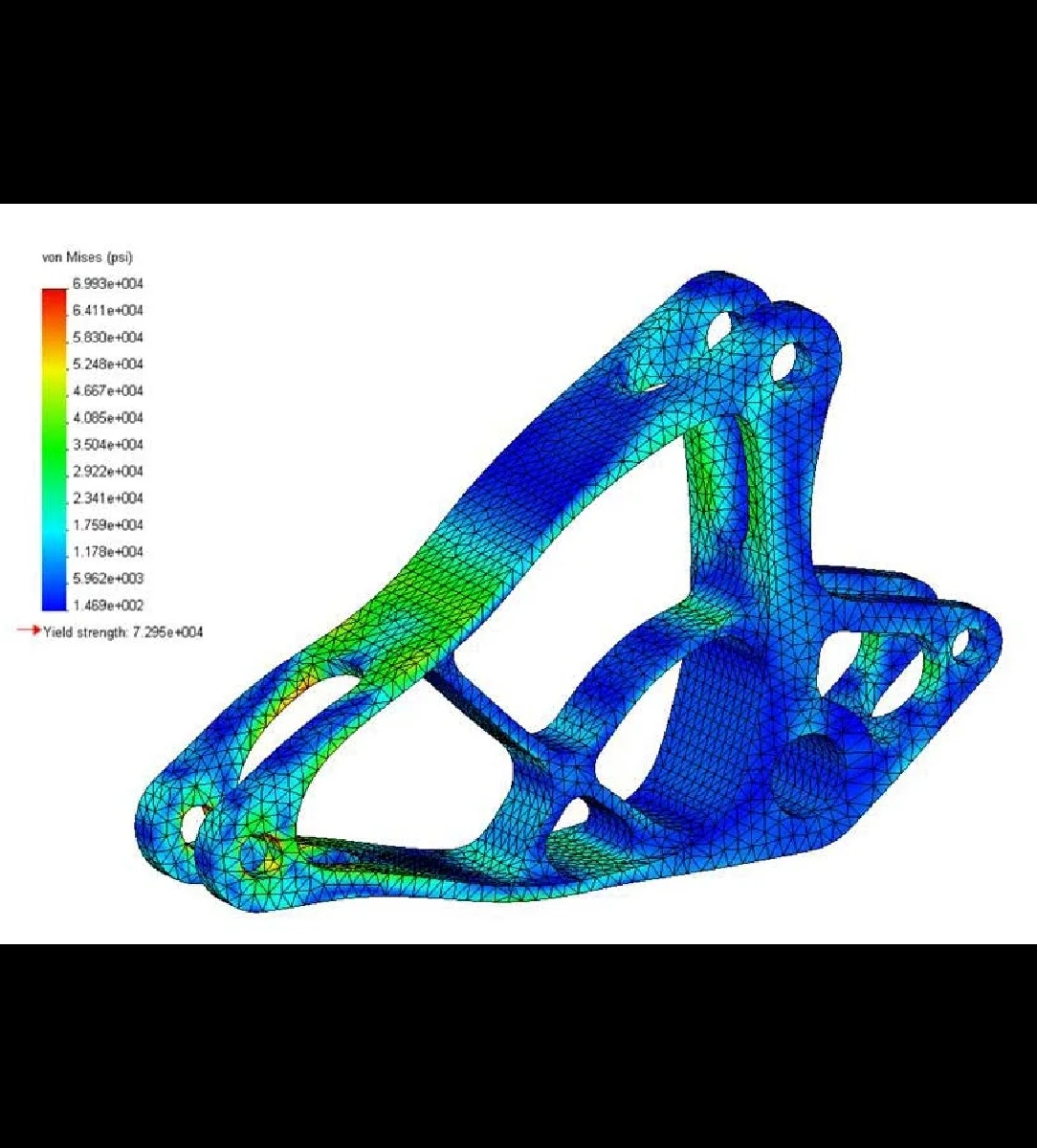
As part of Queen Mary Racing, I worked on the suspension for a new Formula Student vehicle platform. The task was to reduce weight while maintaining structural stiffness and keeping the design compatible with the rest of the car.
My contribution
I redesigned eight suspension components, including wishbones, uprights and the bell crank. I used CAD and Ansys finite element analysis to evaluate the geometry and iterate on the design.
The work reduced unsprung mass by 12% while maintaining peak structural stiffness. I treated component geometry as part of the whole vehicle, checking decisions against the requirements of the chassis, powertrain and aerodynamics teams.
| Consideration | How it shaped the work |
|---|---|
| Mass and stiffness | Used FEA and geometry changes to compare the design options |
| Mechanical interfaces | Coordinated attachment points and space requirements with other teams |
| Manufacture | Considered how the revised parts could be made as the design developed |
What I learned
The lightest individual part is only useful if it works within the vehicle. The project made me more deliberate about communicating interface changes and balancing analysis results with the needs of the people designing the surrounding systems.