The brief
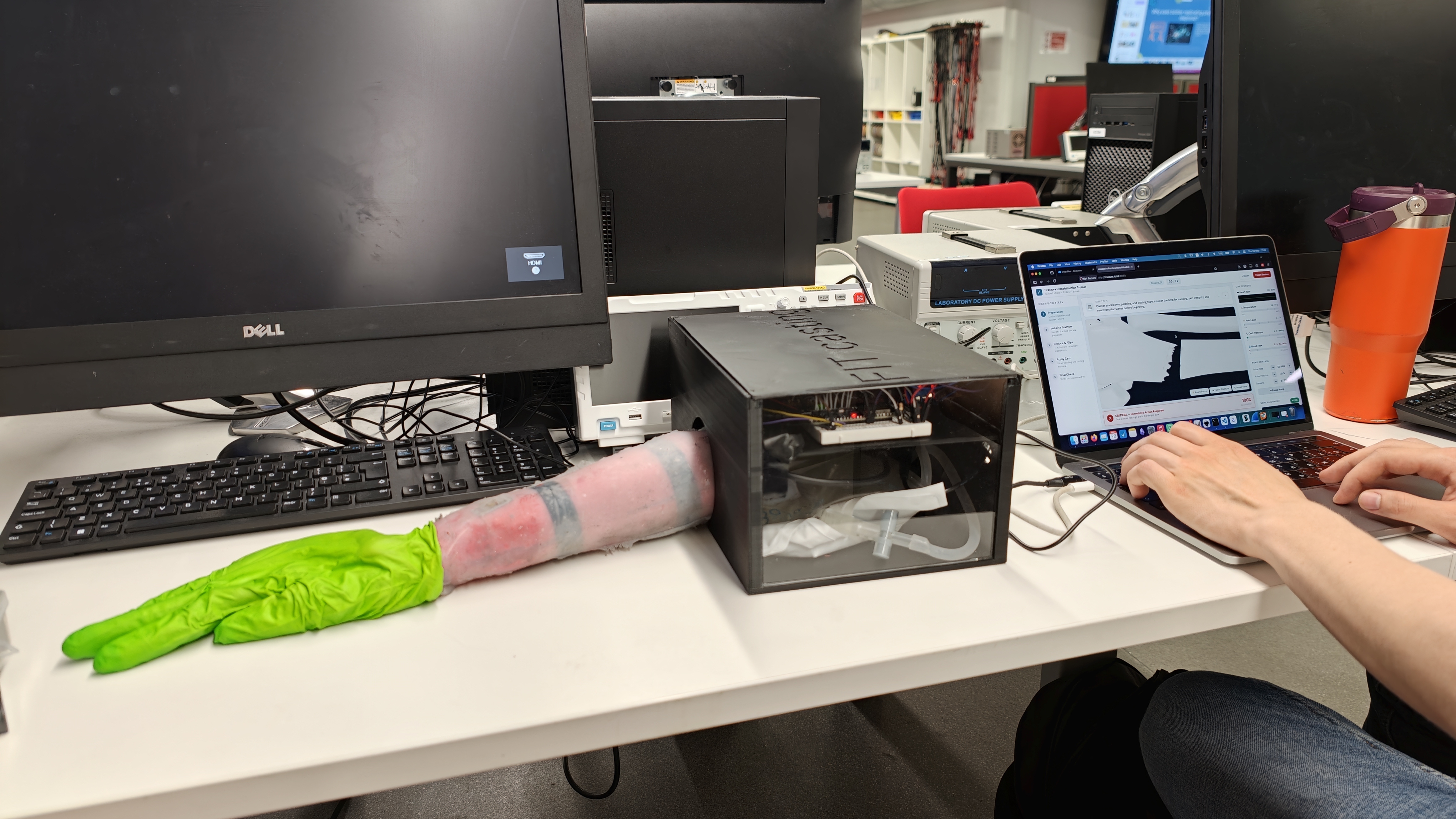
Build an adult-scale forearm for practising fracture immobilisation, with feedback from the physical model. The team combined an anatomical core, flow pumping, haptics, sensing and a user interface in one prototype.
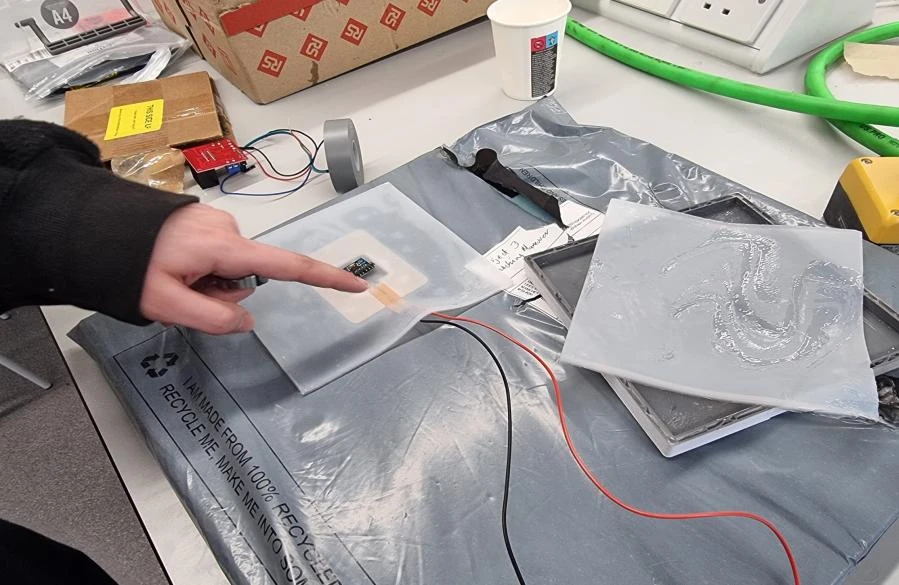
I led the anatomical core workstream in a five-person team. My responsibility was the physical structure that the other systems had to fit into: the skeleton, soft tissue, moulds and internal routing. I also integrated Hall-effect sensing at the fracture site with an ESP32 for real-time alignment feedback.
Designing the core
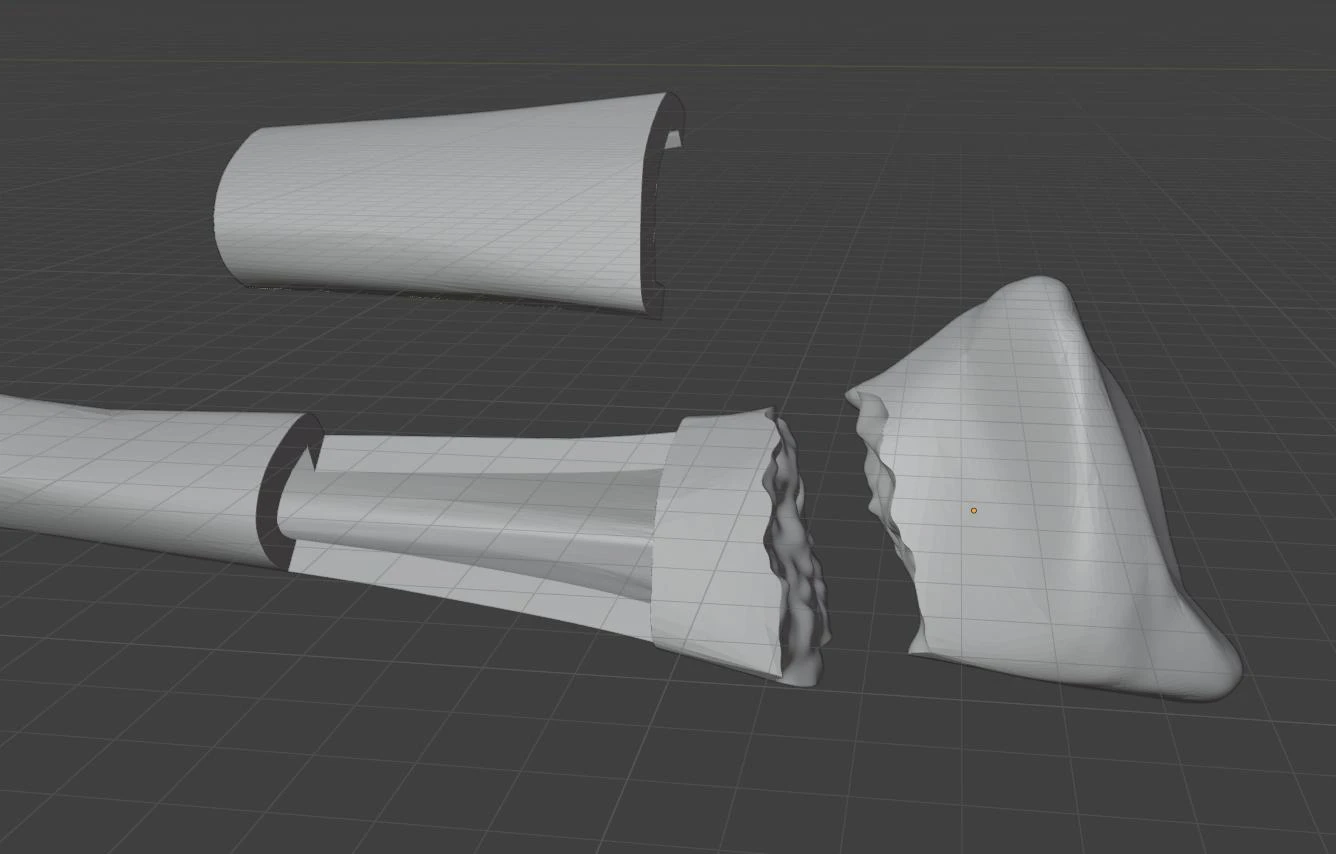
I modelled the 1:1 forearm in Blender, including the fracture site, joints and routes for fluid tubing, sensor wiring and haptic actuators. These interfaces needed agreement across the team before printing, because a small change in one subsystem could force another part to be remade.
| Interface | Design consideration |
|---|---|
| Skeleton and fracture site | Maintain the anatomical form while allowing the fracture fragments to move |
| Fluidics | Route tubing through the core without obstructing the other systems |
| Sensing | Place Hall-effect sensors and wiring around the fracture site |
| Haptics | Provide space for actuators within the soft tissue |
| Soft tissue | Use replaceable moulded sections around the printed structure |
Choosing a material
I compared four FDM materials using a cantilever deflection test under progressive loading. The aim was to compare how the printed specimens responded across the test range, rather than choose solely from a material datasheet.
| Material | Observation in the study |
|---|---|
| PETG-CF | The most consistent apparent elastic response across the loading range |
| PLA | Apparent stiffness decreased as loading increased; visible whitening at the highest load |
| ASA-CF | Intermediate behaviour, with mild whitening at the highest load |
| ABS | Drift in the measured response and the strongest visible whitening |
I selected PETG-CF for the intended load-bearing elements. Material availability meant the prototype used PLA and ASA-CF in places. That distinction matters: the selected material and the material in the prototype were not identical.
The rig was useful for comparison, but the deflections were large relative to the specimens. I therefore treat the calculated modulus values as approximate. The study did not establish long-term fatigue life; repeated-load testing remains future work.
Manufacturing the soft tissue
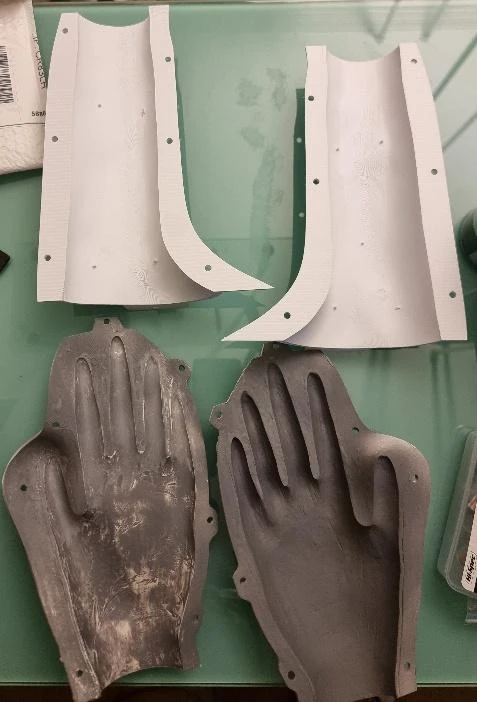
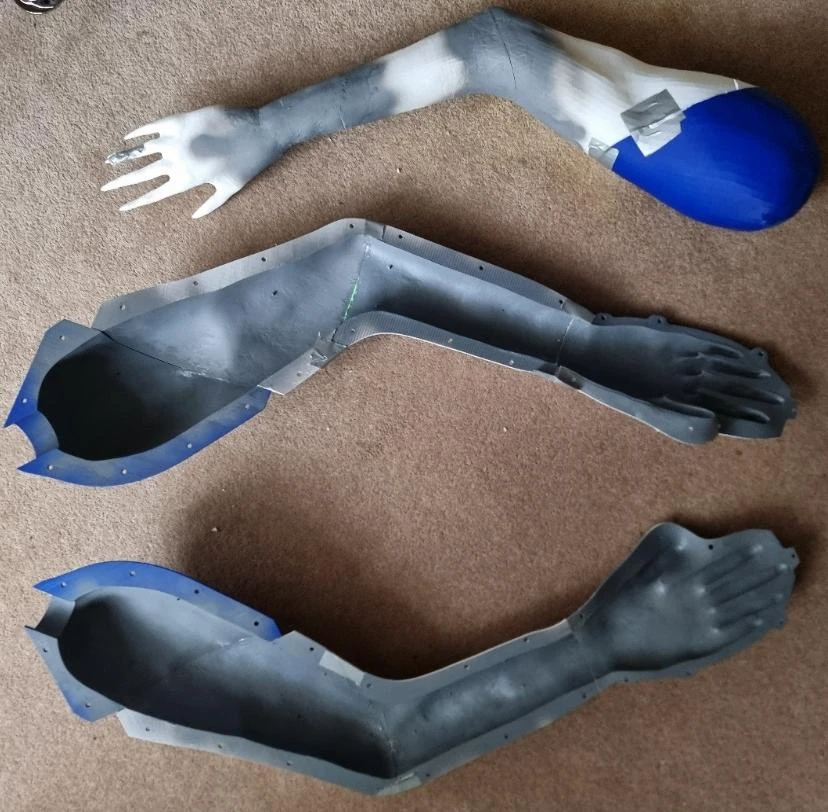
I designed and printed multi-part moulds around the final bone geometry. The soft tissue used two silicone layers: Dragon Skin 30A for the muscle layer and Ecoflex 00-30 for the skin.
Casting came after checking the skeleton and internal routes. The modular arrangement also allowed individual soft-tissue sections to be replaced without remaking the entire core.
Outcome and next steps
The team produced a functional training prototype with an estimated materials cost below £500. My work combined CAD, material comparison, FDM printing, silicone casting and sensing integration.
Informal handling comparisons favoured the layered soft tissue over uniform samples. That was qualitative feedback, not clinical validation. Full cyclic testing and formal clinical evaluation were still outstanding at the end of the project.
The main lesson was to settle physical interfaces early. A modular design only saves work if dimensions, tolerances and routing are clear enough for every workstream to build against them.
Reports and proposal video
The group report covers the complete system. My individual report gives the detail behind the anatomical core, material study and manufacture.
The video below introduces the project proposal.